

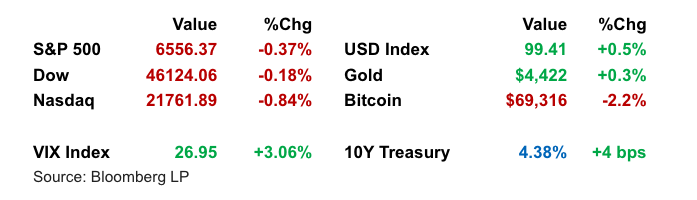
Stocks finished lower but off session lows as investors weighed tentative diplomatic signals around the Iran conflict against ongoing uncertainty, while a sharp rebound in oil prices and rising bond yields reinforced concerns about inflation and growth. Markets remain highly reactive to headlines tied to the Strait of Hormuz, with sentiment swinging between cautious optimism and structural risk.
Key Headlines & Market Movers:
Strait of Hormuz Remains the Key Market Catalyst: Markets stabilized after reports of potential US-Iran talks, but conviction remains low as any durable recovery hinges on a meaningful reopening of the Strait of Hormuz. While diplomatic progress is being discussed, investors are skeptical that negotiations alone will offset supply disruptions, keeping oil elevated and risk assets volatile.
Oil Surge Rekindles Inflation and Policy Concerns: Crude prices rebounded sharply, reversing prior declines and reinforcing fears that prolonged supply shocks could keep inflation elevated. This dynamic is pushing bond yields higher and complicating the outlook for central banks, as tightening policy into supply-driven inflation historically increases financial stress and downside risks to growth.
- Private Credit Stress Signals Broader Financial Fragility: Redemption restrictions at major private credit firms highlight emerging liquidity pressures in a $1.8 trillion market, underscoring a less visible but important risk backdrop. Combined with slowing business activity and rising input costs, this adds another layer of concern around the resilience of credit markets and broader economic stability.
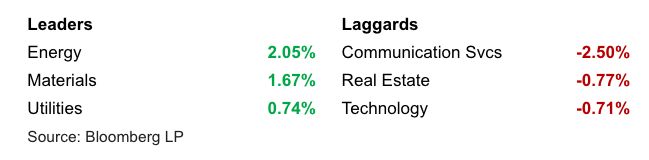
S&P 500 Sector Performance
Looking Ahead
Investor focus will center on whether tangible progress emerges from geopolitical negotiations and, critically, whether energy flows normalize, as oil remains the transmission channel into inflation and policy expectations. At the same time, markets will monitor signs of stress in credit and economic data for confirmation of whether current disruptions remain contained or begin to materially impact global growth trajectories.
Disclaimer
Duncan Williams Asset Management is an SEC registered investment adviser. SEC registration does not constitute an endorsement of Duncan Williams Asset Management by the SEC nor does it indicate that Duncan Williams Asset Management has attained a particular level of skill or ability.
This material prepared by Duncan Williams Asset Management is for informational purposes only and is accurate as of the date it was prepared. It is not intended to serve as a substitute for personalized investment advice or as a recommendation or solicitation of any particular security, strategy or investment product. Past performance is not indicative of future results. Investing involves risks, including the risk of loss of principal. Before making any investment decision, investors should consult with their financial advisor, consider their individual financial circumstances, and carefully review all relevant information and risk factors. Duncan Williams Asset Management assumes no responsibility for errors or omissions, nor does it accept liability for any loss arising from reliance on this information.
Advisory services are only offered to clients or prospective clients where Duncan Williams Asset Management and its representatives are properly licensed or exempt from licensure. No advice may be rendered by Duncan Williams Asset Management unless a client service agreement is in place.
This material is not intended to serve as personalized tax, legal and/or investment advice since the availability and effectiveness of any strategy is dependent upon your individual facts and circumstances. Duncan Williams Asset Management is not a legal or accounting firm. Please consult with your legal or tax professional regarding your specific tax situation when determining if any of the mentioned strategies are right for you.

Investment Management Group (IMG)
The Investment Management Group at Duncan Williams Asset Management is led by a team with extensive experience in investment management, financial planning, and client service. President David Scully, CFA®, CFP®, has more than 20 years of experience and is active in Memphis civic organizations. Chief Investment Officer Kyle Gowen, CFA®, CFP®, oversees investment strategy and is engaged with the local community. Investment Analyst Jack Eason, CFA®, provides research and supports charitable initiatives. The IMG team is committed to professional standards, client service, and community involvement. No statement is intended as an offer of investment advice or a guarantee of future results.


Recent Articles


Let's talk about your future.
Connect with a local Duncan Williams Asset Management advisor

5350 Poplar Ave.
Suite 600
Memphis, TN 38119

