

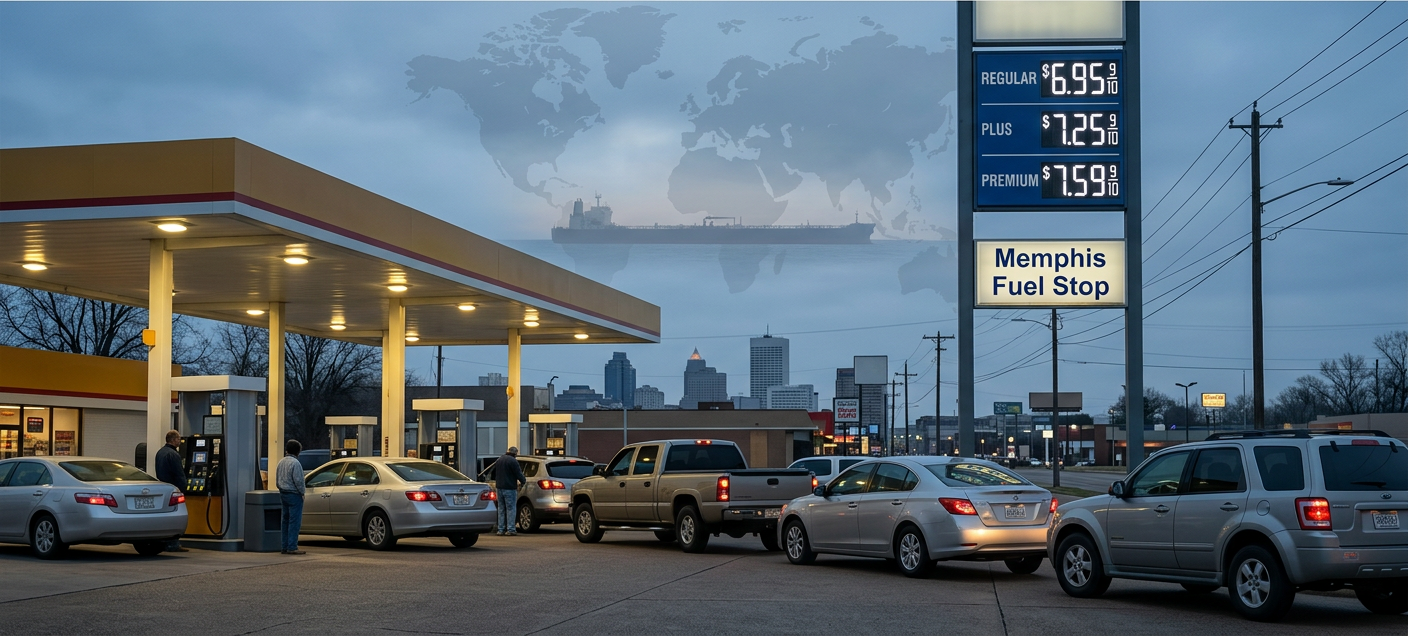
On a gray Memphis morning, a driver notices regular unleaded is $3.44 a gallon—almost a dollar more than last month. The routine is unchanged, but the cost of filling up has suddenly jumped. Across Shelby County, families and businesses feel the sting of rising transportation costs as they begin their day, whether in driveways, parking lots, or truck yards.
The higher prices start thousands of miles away in the Strait of Hormuz. Recent conflict involving Iran has turned this narrow waterway—a route for about 20% of the world’s oil—into a flashpoint. Attacks on tankers and threats to close the strait have sent global crude prices up by more than 40 percent, raising the cost of gasoline, diesel, and jet fuel. Governments have released oil from emergency reserves, including the U.S., and urged less use. These steps help only a little. In the end, consumers pay more at the pump.
Tennessee is feeling the effects right away. AAA shows that statewide gas prices rose by 40 to 80 cents per gallon over a few weeks. The average now tops three dollars for the first time since 2024. Memphis has the highest gas prices in the state and some of the sharpest weekly hikes. For local families, that extra $10 to $20 a week for fuel is difficult, especially with other rising costs.
But rising fuel costs hit more than just drivers. Memphis is a distribution hub, moving goods by truck, train, and plane, all of which need affordable diesel and jet fuel. As those prices go up, trucking companies and carriers pay more, shipping surcharges appear, and everyday goods in stores cost more. Social media posts of crowded gas stations or empty pumps can trigger panic buying, even when fuel supplies are normal.
Memphis can’t prevent a crisis in the Strait of Hormuz, but it can reduce its impact by taking specific steps. The city should invest in more flexible public transit, adopt smarter freight solutions, and encourage the use of newer, more efficient vehicles. These measures can help Memphis withstand future oil shocks that originate far away. For now, though, the most immediate sign of a global fuel crisis is the number on a corner price board—a number that reflects more than just one tank of gas.
Sources
- Global 2026 energy crisis context and oil shock
- https://www.alvarezandmarsal.com/thought-leadership/navigating-the-2026-energy-crisis-beyond-the-headlines
- https://hbr.org/2026/03/the-oil-shock-is-here-and-were-just-beginning-to-feel-it
- https://360info.org/oil-shocks-and-crashes-where-are-we-headed-with-the-2026-crisis/
- https://www.reuters.com/business/energy/ceraweek-global-energy-crisis-deepens-efforts-plug-supply-gap-fall-short-2026-03-23/
- Government/IEA/SPR response and strategic reserves
- https://www.cnbc.com/2026/03/11/iran-war-trump-oil-strategic-petroleum-reserve.html
- https://www.cnbc.com/2026/03/20/iea-oil-fuel-prices-energy-advice-consumers-crisis.html
- https://www.latimes.com/politics/story/2026-03-11/400-million-barrels-of-oil-to-be-released-from-strategic-reserves-as-iran-targets-oil-shipping
- https://www.businessinsider.com/how-rising-energy-prices-are-affecting-daily-life-worldwide-2026-3
- Tennessee and Memphis gas price data (AAA and local outlets)
- https://newsroom.acg.aaa.com/tn-gas-prices-surge-42-cents/
- https://www.wbbjtv.com/2026/03/23/aaa-tennessee-gas-prices-rise-30-cents/
- https://www.memphisflyer.com/aaa-memphis-leads-state-gas-price-surge/
- https://www.wivk.com/2026/03/16/45234/
- https://gasprices.aaa.com/?state=TN
- Background on Tennessee fuel disruptions
- https://www.newschannel5.com/news/emergency-declaration-made-to-avoid-petroleum-supply-disruptions
Disclosure
This article is for informational and educational purposes only and does not constitute personalized financial, investment, tax, or legal advice. The information is based on sources believed to be reliable at the time of writing, but conditions in energy markets and fuel prices can change quickly, and accuracy or completeness cannot be guaranteed. Readers should consult with appropriate professionals regarding their specific situation before making any financial, investment, or energy‑related decisions.


Recent Articles



Let's talk about your future.
Connect with a local Duncan Williams Asset Management advisor

5350 Poplar Ave.
Suite 600
Memphis, TN 38119

