

Coverage Testing Explained: Making Sure Your Plan Serves the Right Employees
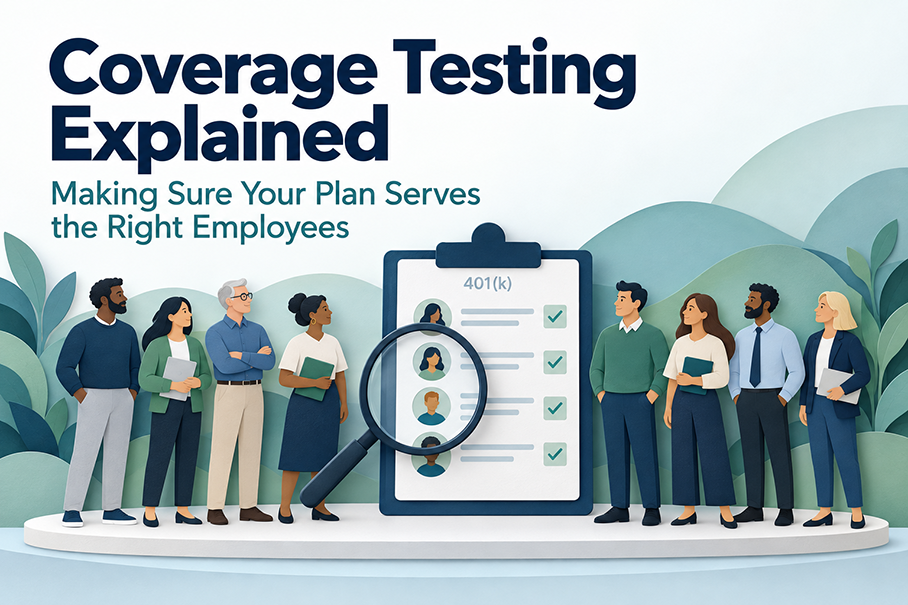
Coverage Testing Explained: Making Sure Your Plan Serves the Right Employees
A retirement plan is built around eligibility and participation rules, but those rules also create a compliance-testing question: whether the plan is benefiting the employee groups it is designed to serve under applicable requirements. As business owners review October testing information, understanding coverage testing at a conceptual level can make it easier to ask informed questions about workforce data and plan design.
Coverage testing is about the employee population
Coverage testing looks at who benefits under the plan in relation to the broader employee population. It is different from simply counting enrolled employees or reviewing account balances. The analysis may depend on eligibility provisions, entry dates, classifications, related businesses, and other facts that determine which employees are counted and how groups are compared.
For a sponsor, that means an organization chart is not enough. The administrative picture needs to capture how the plan document applies to actual employment records. A business with part-time employees, multiple locations, seasonal hiring, or distinct operating entities may have details worth discussing with its plan administrator before final testing begins.
Plan design and operations must agree
The plan document may describe eligibility conditions, exclusions, and contribution rules. Day-to-day operations determine whether those terms were administered consistently. If a group was included in a payroll feed but excluded in the plan record, or vice versa, the coverage analysis can become more complicated. A periodic comparison between human-resources records and plan data can identify gaps early.
It can be helpful to keep a simple change log for workforce events that may affect plan administration: new locations, mergers, reorganizations, changes in employment classifications, or a new payroll provider. The log does not decide a coverage result, but it gives the plan professional a concise inventory of facts to evaluate.
Workforce change is a governance trigger
A plan that worked smoothly for a stable workforce may need a fresh review after business growth or organizational change. Sponsors can consider whether eligibility and entry-date processes still fit current hiring patterns, whether managers know how to identify plan-eligible employees, and whether employee data reaches the plan administrator on a dependable schedule.
The question is not whether a single design is right for every business. Rather, it is whether the plan’s written terms, administrative processes, and workforce reality are aligned. This is especially important when a business owner makes changes outside the benefits function that later influence plan data.
Good records support a better conversation
Coverage testing can involve technical determinations, so sponsors should rely on qualified plan professionals for calculations and interpretation. The sponsor can nevertheless make the process more effective by providing complete records and asking for explanations in plain language. A clear summary should state the data period, employee groups considered, assumptions, and unresolved questions.
Maintaining that summary with the annual plan file supports continuity when internal staff or outside providers change. It also helps the sponsor demonstrate that coverage was treated as part of a regular governance process rather than as a one-time exercise completed without review.
Questions to carry into the next review
The most useful follow-up to a discussion of coverage testing explained: making sure your plan serves the right employees is a short, repeatable set of questions. What facts changed during the year? Which data sources did the team rely on? Who confirmed the information, and where is the final record kept? These questions are intentionally practical. They help a sponsor distinguish between an issue that needs immediate professional attention and a process item that should be improved before the next annual cycle.
It can be helpful to include the people closest to the work without expanding sensitive information unnecessarily. Payroll can explain how compensation and elections are processed, human resources can confirm employment events and eligibility records, and the plan administrator can explain the effect of those facts under the document and applicable requirements. The business owner or committee can then focus on oversight: confirming that questions were answered, decisions were documented, and responsibilities were assigned.
Finally, keep the review proportionate. A concise meeting note, the reports considered, and a clear list of follow-up items are often more useful than an informal exchange that cannot be reconstructed later. This approach does not guarantee a particular result, and it does not replace legal, tax, or administrative advice. It does create a dependable governance habit: identify the question, obtain appropriate input, carry out agreed actions, and check the process again as the plan and business evolve.
The same discipline can make service-provider conversations more efficient. Sending a short agenda and relevant records before a meeting gives the administrator or advisor a chance to identify missing facts and prepare a focused explanation. Afterward, the sponsor can circulate only the action items that each internal owner needs to complete. This keeps plan governance connected to everyday business operations while respecting the specialized roles of payroll, legal, tax, and retirement-plan professionals. Over time, this record of questions and completed actions can be a useful reference when the business experiences a staffing change, a new provider relationship, or another event that affects plan administration. Consistently applying this approach can also make annual reviews calmer, more focused, and easier to document. It gives the sponsor a practical reference point for confirming that administrative commitments, provider requests, and internal approvals remain aligned throughout the plan year.
A practical process for plan sponsors
1. Request a description of the employee groups and eligibility assumptions used in the coverage review, including the period of data being analyzed.
2. Compare those groups with current human-resources and payroll records. Flag acquisitions, locations, employment categories, or related entities that may need professional review.
3. Confirm that recent workforce changes were communicated to the recordkeeper and administrator, and provide supporting records where requested.
4. Keep the final explanation and any follow-up recommendations in the plan governance file. Calendar a review after significant organizational changes, not only at annual testing time.
Coverage testing is most manageable when it is connected to ordinary workforce administration. Building a reliable path from business changes to plan records can help sponsors give their providers better information and reinforce the habits that support ongoing retirement-plan governance.
Want help reviewing the workforce information behind coverage testing?
Duncan Williams Asset Management can help you organize the operational questions and prepare for discussions with plan professionals. Duncan Williams Asset Management can help you walk through coverage testing, understand the questions to ask your service providers, and identify areas where additional professional input may be useful. To discuss your plan's coverage review process, call our team at 901.435.4250 to schedule a conversation about your retirement plan.
Sources & further reading
• Internal Revenue Service — 401(k) Plan Fix-It Guide: ADP and ACP Nondiscrimination Tests: https://www.irs.gov/retirement-plans/401k-plan-fix-it-guide-the-plan-failed-the-401k-adp-and-acp-nondiscrimination-tests
• Internal Revenue Service — Is My 401(k) Top-Heavy?: https://www.irs.gov/retirement-plans/is-my-401k-top-heavy
• Internal Revenue Service — Fixing Common Plan Mistakes: Top-Heavy Errors: https://www.irs.gov/retirement-plans/fixing-common-plan-mistakes-top-heavy-errors-in-defined-contribution-plans
• Internal Revenue Service — Retirement Plan Correction Program FAQs: https://www.irs.gov/retirement-plans/retirement-plans-faqs-regarding-governmental-plans-and-epcrs
Disclosure
This material is provided for educational and informational purposes only and does not constitute investment, tax, or legal advice. It is not intended to be, and should not be construed as, a recommendation to adopt any specific plan design, investment, or strategy. The information here is general in nature and may not reflect the current rules or guidance applicable to your specific situation. Business owners and plan sponsors should consult with their own qualified tax advisors, legal counsel, and retirement plan professionals before making any decisions related to their 401(k) or other retirement plans.


Recent Articles


Let's talk about your future.
Connect with a local Duncan Williams Asset Management advisor

5350 Poplar Ave.
Suite 600
Memphis, TN 38119

