

Stocks edge higher on in‑line inflation; Dow lags while growth steadies
Daily Recap
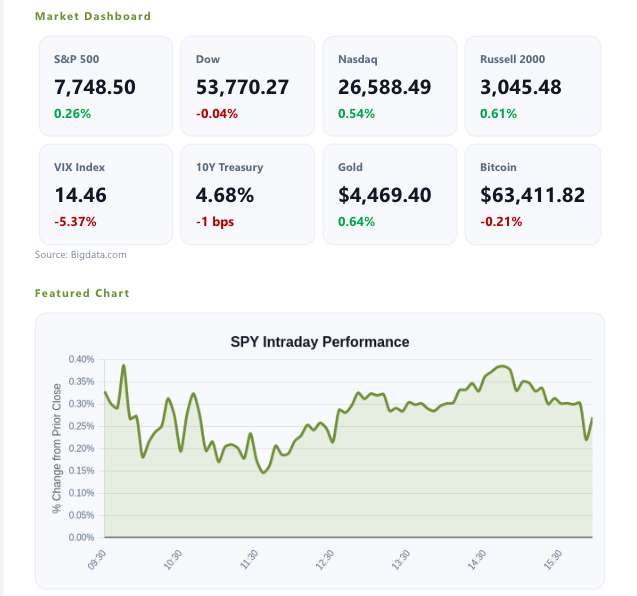
U.S. equities finished mixed after a cooler-than-feared CPI print eased rate anxiety: the S&P 500 and Nasdaq inched higher while the Dow slipped, as investors balanced disinflation relief against lingering macro and geopolitical crosscurrents. Earnings remained a quiet tailwind, helping growth benchmarks hold the bid even as leadership narrowed.
Key Headlines & Market Movers
CPI lands on target, keeping the Fed in wait‑and‑see mode: Inflation rose 3.4% year‑over‑year—right on expectations—blunting fears that a recent energy bounce would rekindle broader price pressures. That in‑line print reinforced the case for the Fed to hold fire at an upcoming meeting, buying time to assess the downtrend in goods prices and a cooling labor backdrop. The relief was enough to stabilize risk appetite without igniting a disorderly dash into high beta.
Earnings tone keeps a floor under growth benchmarks: Corporate results remained broadly well received, helping the Nasdaq outperform modestly as investors leaned back into quality growth after last week’s swings. The day’s grind higher fit a yearlong pattern: stock prices tracking resilient profit growth more than any single macro headline. That backdrop, coupled with cooling inflation, supported a measured risk‑on tilt rather than a speculative chase.
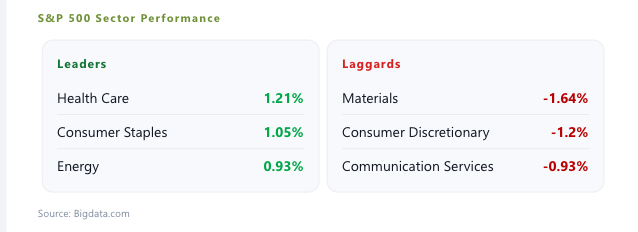
Oil and Middle East headlines keep the tape sensitive: Crude hovering around the low‑$80s kept energy in focus, with early strength tied to supply‑risk headlines and shipping uncertainty. Markets continue to fade and re‑price on any sign of progress—or setback—around the Strait of Hormuz, a swing factor for sentiment and input costs. That backdrop capped intraday momentum even as disinflation relief supported the close.
Looking Ahead
Into the next few sessions, watch whether disinflation sticks in follow‑on data, if oil cools enough to keep rate expectations anchored, and how guidance from remaining reporters shapes the soft‑landing narrative; if yields stay orderly, leadership should continue to favor quality growth over high‑beta swings.
Disclaimer
Duncan Williams Asset Management is an SEC registered investment adviser. SEC registration does not constitute an endorsement of Duncan Williams Asset Management by the SEC nor does it indicate that Duncan Williams Asset Management has attained a particular level of skill or ability.
This material prepared by Duncan Williams Asset Management is for informational purposes only and is accurate as of the date it was prepared. It is not intended to serve as a substitute for personalized investment advice or as a recommendation or solicitation of any particular security, strategy or investment product. Past performance is not indicative of future results. Investing involves risks, including the risk of loss of principal. Before making any investment decision, investors should consult with their financial advisor, consider their individual financial circumstances, and carefully review all relevant information and risk factors. Duncan Williams Asset Management assumes no responsibility for errors or omissions, nor does it accept liability for any loss arising from reliance on this information.
Advisory services are only offered to clients or prospective clients where Duncan Williams Asset Management and its representatives are properly licensed or exempt from licensure. No advice may be rendered by Duncan Williams Asset Management unless a client service agreement is in place.
This material is not intended to serve as personalized tax, legal and/or investment advice since the availability and effectiveness of any strategy is dependent upon your individual facts and circumstances. Duncan Williams Asset Management is not a legal or accounting firm. Please consult with your legal or tax professional regarding your specific tax situation when determining if any of the mentioned strategies are right for you.

Investment Management Group (IMG)
The Investment Management Group at Duncan Williams Asset Management is led by a team with extensive experience in investment management, financial planning, and client service. President David Scully, CFA®, CFP®, has more than 20 years of experience and is active in Memphis civic organizations. Chief Investment Officer Kyle Gowen, CFA®, CFP®, oversees investment strategy and is engaged with the local community. Investment Analyst Jack Eason, CFA®, provides research and supports charitable initiatives. The IMG team is committed to professional standards, client service, and community involvement. No statement is intended as an offer of investment advice or a guarantee of future results.


Recent Articles


Let's talk about your future.
Connect with a local Duncan Williams Asset Management advisor

5350 Poplar Ave.
Suite 600
Memphis, TN 38119

