

Debt Decisions in 2026: How to Tell Good Debt from Bad—and Whether to Pay It Off or Boost Your 401(k) Contributions
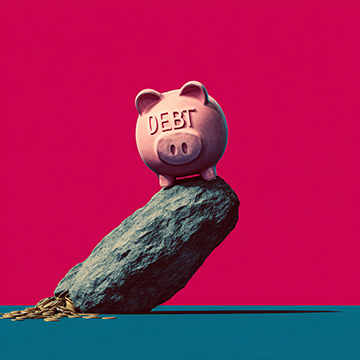
Good debt is the kind that helps you build wealth or grow your income over time—think student loans or a mortgage. Bad debt, on the other hand, usually means high-interest borrowing for things that lose value fast, like credit cards used for shopping sprees. Deciding whether to pay off debt faster or put more into your 401(k) comes down to looking at your interest rates, whether your employer offers a match, how long you plan to invest, and how much risk you’re comfortable with.
Defining good vs. bad debt
- Good debt usually means borrowing at a low interest rate to invest in your future—like a manageable mortgage, student loans that can increase your earning power, or a business loan set up for success.
- Bad debt often comes with high interest rates and is typically used for things that don’t last—think running up credit cards or taking out expensive personal loans for purchases that don’t make you better off financially.
- In 2026, good debt usually means a fixed interest rate around 6% or less, payments you can comfortably afford, and a clear benefit to your long-term finances or taxes.
- Bad debt, on the other hand, often comes with double-digit or unpredictable interest rates, payments that stretch your budget thin, and borrowing for wants instead of needs—with no real way to build wealth.
A 2026 framework: pay down or keep?
- Consider paying down faster when the after‑tax interest rate on the debt is higher than what you reasonably expect to earn on diversified investments over time, which many analyses estimate around 6% to 8% annually for long‑term stock‑heavy portfolios.
- High‑interest credit‑card or personal‑loan balances (often 15%–25% APR) almost always fall into the “accelerate payoff” category because the guaranteed savings from eliminating that interest typically exceed expected market returns.
- It can be reasonable to accept or pay only the scheduled amount on lower‑rate mortgage, auto, or student loans if rates are modest and you are on track with emergency savings and retirement contributions.
- A practical 2026 sequence many financial educators use is: build a basic emergency savings, make minimum payments on all debts, capture the full 401(k) employer match, aggressively pay off toxic, high‑rate debt, then increase retirement investing while methodically retiring remaining lower‑rate loans.
Should you pay debt or invest in your 401(k)?
- Employer matching contributions are often described as an immediate 50%–100% “return” on what you contribute up to the match limit, which is why many sources recommend contributing at least enough to receive the full match before directing extra dollars elsewhere.
- If your employer does not offer a match, comparing the interest rate on your debt to the long‑term expected return of your 401(k) investments becomes more important, because paying down a high‑rate balance can effectively equal a risk‑free return at that rate.
- A common guideline is to prioritize extra payments toward debt with interest of roughly 6% or higher after capturing any match, since analyses show that paying down such debt often beats the expected benefit of additional retirement contributions for many investors.
- When debt rates are low, and you have a long time until retirement, steadily investing more in your 401(k) while making required debt payments can harness compounding returns and potential tax advantages, as long as you understand that investment values can fluctuate and losses are possible.
Step‑by‑step decision checklist
- Step 1: Confirm you are current on all minimum payments and maintain a basic emergency fund (often suggested as at least a few months of essential expenses) before adding to investments or accelerating repayment.
- Step 2: Determine whether you receive an employer 401(k) match, and if so, aim to contribute at least enough to earn the full match before using extra cash solely for additional debt payments or investing.
- Step 3: List each debt’s balance, rate, and tax treatment, then target extra payments to the highest‑rate, non‑deductible debts first, such as most credit‑card and many personal‑loan balances.
- Step 4: For remaining lower‑rate debts, compare the interest cost to your expected long‑term portfolio return and your comfort with risk; more risk‑averse investors may favor faster payoff, while those comfortable with market volatility and long time horizons may choose higher 401(k) contributions.
- Step 5: Revisit this analysis regularly, because interest rates, investment performance, income, and goals can all change, and an approach that fits early in 2026 may need adjustment if your circumstances or markets shift.
Disclosure
This article is for educational purposes only and is not individualized investment, tax, or legal advice. The information is based on sources believed to be reliable but cannot be guaranteed, and examples are hypothetical and for illustration only, not predictions or guarantees of future results.
Any investment involves risk, including the possible loss of principal, and past performance of markets or strategies does not guarantee future results. Before making any financial decisions, consider your personal circumstances and, if applicable, consult with a qualified financial professional and tax advisor; do not make changes to your 401(k), IRA, or debt‑repayment strategy solely based on this material.
This content does not recommend or endorse any specific security, investment product, account type, or lending arrangement and should not be construed as a solicitation or offer to buy or sell any security or other financial instrument. If you work with or are considering working with an SEC‑registered investment adviser, review that adviser’s Form ADV Part 2A brochure and other disclosures, which describe services, fees, conflicts of interest, and risks in more detail.
Sources used in preparing this article (accessed 2025–2026):
- Fidelity: Good debt vs. bad debt – https://www.fidelity.com/learning-center/smart-money/good-debt-vs-bad-debt
- Experian: Good Debt vs. Bad Debt – https://www.experian.com/blogs/ask-experian/good-debt-vs-bad-debt-whats-the-difference/
- Legacy Bank: Good Debt vs. Bad Debt – https://legacy.bank/2025/09/09/good-debt-vs-bad-debt/
- U.S. Bank: Financial Leverage: What Is Good Debt vs Bad Debt? – https://www.usbank.com/wealth-management/financial-perspectives/financial-planning/financial-leverage-what-is-good-debt-vs-bad-debt.html
- Human Interest: Should I contribute to my 401(k) or pay off debt? – https://humaninterest.com/learn/articles/should-i-contribute-to-my-401k-or-pay-off-debt/
- Investopedia: 401(k) or erase credit card debt? – https://www.investopedia.com/401-k-vs-credit-card-debt-11722923
- Fidelity: Pay down debt vs. invest – https://www.fidelity.com/learning-center/personal-finance/pay-down-debt-vs-invest
- White Coat Investor: Should You Pay Off Debt or Invest? – https://www.whitecoatinvestor.com/pay-off-debt-or-invest/
- SEC: Study Regarding Financial Literacy Among Investors – https://www.sec.gov/news/studies/2012/917-financial-literacy-study-part1.pdf
- Wealthtender: SEC Marketing Rule & Disclosures – https://wealthtender.com/advisors/sec-marketing-rule/disclosures/


Recent Articles

%20Review%20Before%20Q4.png)
Let's talk about your future.
Connect with a local Duncan Williams Asset Management advisor

5350 Poplar Ave.
Suite 600
Memphis, TN 38119

