

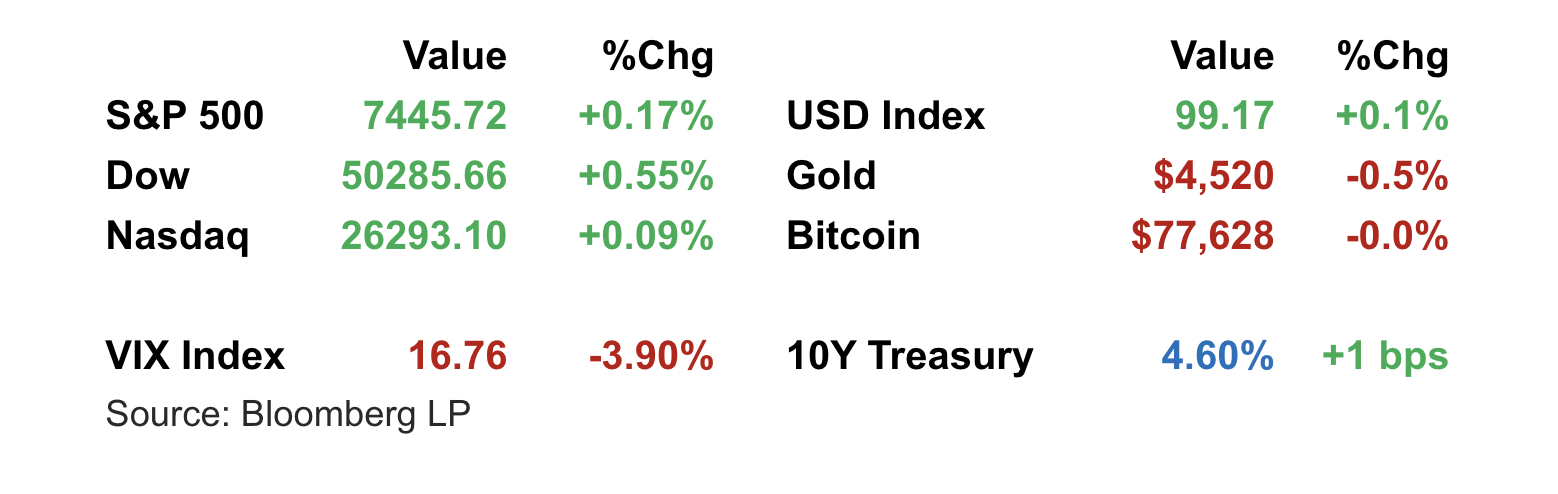
Stocks finished higher in a choppy session as hopes for a US-Iran diplomatic breakthrough eased fears of prolonged energy disruption. Falling oil prices helped pull Treasury yields lower, giving equities some support even as investors remained focused on inflation risks tied to the Strait of Hormuz. The Dow reached a new closing high, while Nvidia slipped despite strong results and guidance, suggesting expectations were already elevated.
Key Headlines & Market Movers:
US-Iran Deal Hopes Ease Oil Shock Fears: Oil reversed lower as investors reacted to signs that a diplomatic path may be emerging, including comments from US officials and Iran that suggested some gaps had narrowed. The outlook remains uncertain, however, as Iran’s stance on uranium stockpiles and discussions around tolls in the Strait of Hormuz complicate negotiations. A reopening or normalization of traffic through the strait would reduce pressure on energy markets and lower the risk of a fresh inflation shock.
- Rates Fall as Energy Pressures Cool: Treasury yields declined as crude prices moved lower, easing concerns that central banks could be forced into a more aggressive inflation-fighting stance. The 10-year Treasury yield slipped from recent highs, helping stabilize risk appetite after a period of rate-driven pressure. Still, JPMorgan’s Jamie Dimon warned that rates could climb much further, keeping bond-market risks firmly in focus.
Corporate Moves Show Wide Dispersion: IBM jumped after securing a $1 billion award to build a US quantum-chip foundry, lifting related quantum names as well. Walmart fell after warning that higher fuel costs are pressuring margins and could lead to higher consumer prices, while Deere declined as farm machinery demand remained weak. Ralph Lauren rallied on stronger-than-expected results, and Nvidia’s post-earnings decline showed that even strong AI demand may not be enough when expectations are high.
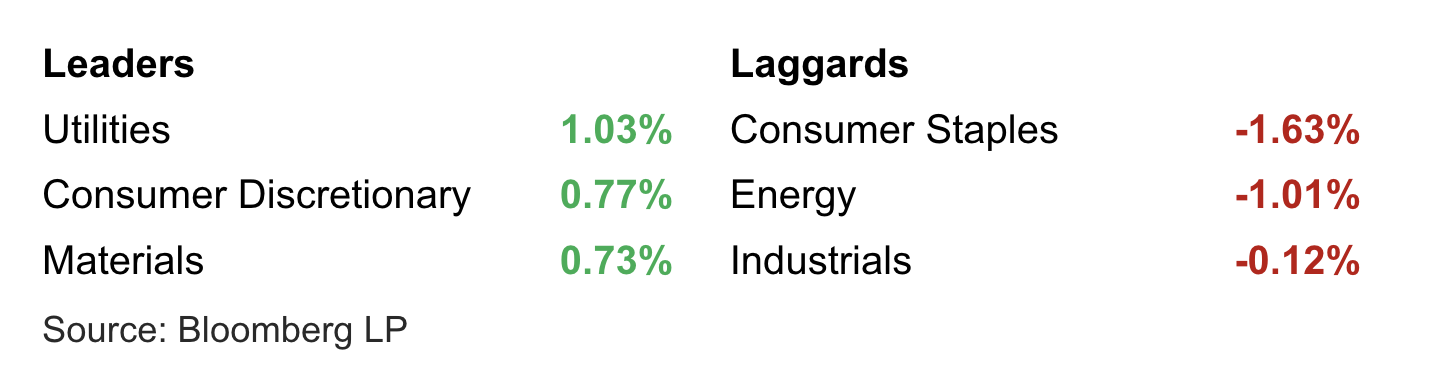
S&P 500 Sector Performance
Looking Ahead
Markets will remain highly sensitive to developments around the US-Iran talks, especially any concrete progress on reopening the Strait of Hormuz and stabilizing energy flows. Investors will also watch whether lower oil prices persist, since that would ease inflation concerns and reduce pressure on central banks. Corporate commentary on costs, consumer demand, and capital spending will be important for judging whether the recent equity advance has broader support beyond headline-driven relief.
Disclaimer
Duncan Williams Asset Management is an SEC registered investment adviser. SEC registration does not constitute an endorsement of Duncan Williams Asset Management by the SEC nor does it indicate that Duncan Williams Asset Management has attained a particular level of skill or ability.
This material prepared by Duncan Williams Asset Management is for informational purposes only and is accurate as of the date it was prepared. It is not intended to serve as a substitute for personalized investment advice or as a recommendation or solicitation of any particular security, strategy or investment product. Past performance is not indicative of future results. Investing involves risks, including the risk of loss of principal. Before making any investment decision, investors should consult with their financial advisor, consider their individual financial circumstances, and carefully review all relevant information and risk factors. Duncan Williams Asset Management assumes no responsibility for errors or omissions, nor does it accept liability for any loss arising from reliance on this information.
Advisory services are only offered to clients or prospective clients where Duncan Williams Asset Management and its representatives are properly licensed or exempt from licensure. No advice may be rendered by Duncan Williams Asset Management unless a client service agreement is in place.
This material is not intended to serve as personalized tax, legal and/or investment advice since the availability and effectiveness of any strategy is dependent upon your individual facts and circumstances. Duncan Williams Asset Management is not a legal or accounting firm. Please consult with your legal or tax professional regarding your specific tax situation when determining if any of the mentioned strategies are right for you.

Investment Management Group (IMG)
The Investment Management Group at Duncan Williams Asset Management is led by a team with extensive experience in investment management, financial planning, and client service. President David Scully, CFA®, CFP®, has more than 20 years of experience and is active in Memphis civic organizations. Chief Investment Officer Kyle Gowen, CFA®, CFP®, oversees investment strategy and is engaged with the local community. Investment Analyst Jack Eason, CFA®, provides research and supports charitable initiatives. The IMG team is committed to professional standards, client service, and community involvement. No statement is intended as an offer of investment advice or a guarantee of future results.


Recent Articles

Let's talk about your future.
Connect with a local Duncan Williams Asset Management advisor

5350 Poplar Ave.
Suite 600
Memphis, TN 38119

