

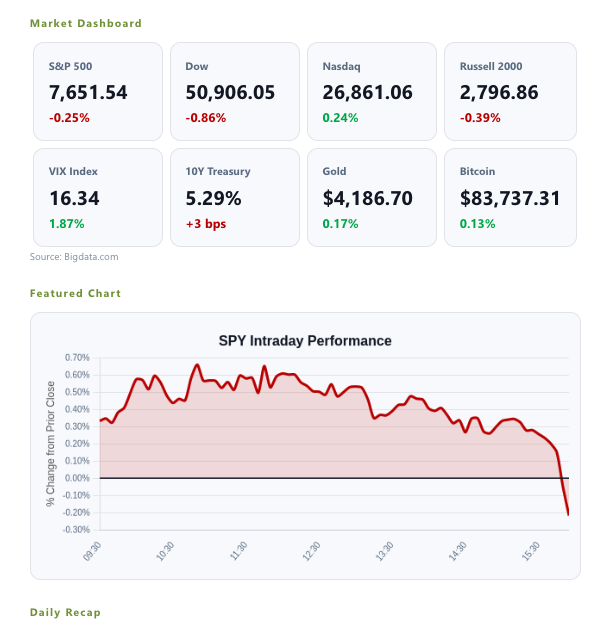
Wall Street ended mixed as a softer core PCE reading eased odds of an October Fed hike, but long-dated Treasury yields pushed to cycle highs on firm growth and spending, keeping pressure on most sectors. Tech and consumer discretionary eked out gains while staples led decliners, leaving the Dow lower, the S&P slightly down, and the Nasdaq modestly higher. Oil stayed firm on tight fuels and expectations OPEC+ will hold output steady, a reminder that energy costs can slow the last mile of disinflation.
Key Headlines & Market Movers
Rates stole the show: long yields climbed despite a softer PCE: Core PCE cooled to 3.0% year over year with a tame monthly print, and markets marked down the chance of an October hike to roughly a third. Even so, the 10‑year hovered near 5.3% and the 30‑year pushed above 5.6%, extending a rare multi‑session surge that kept a lid on broader risk appetite. The paradox—cooler inflation but higher yields—reflected stronger growth data and a market still demanding more term premium to hold duration. That mix helped tech hold up while many other groups lagged.
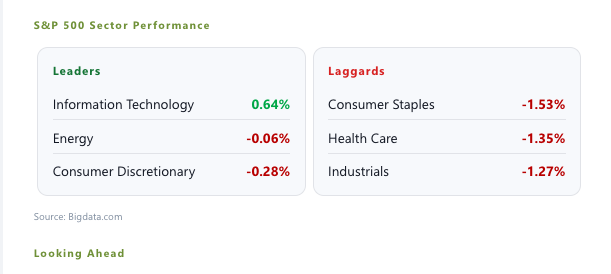
Growth revised up, early equity strength faded into a mixed close:Second‑quarter GDP was revised up to a solid 2.2%, powered by robust consumer spending, while private payrolls rose by 90k—evidence the economy retains momentum. Stocks initially rallied on the inflation relief before slipping as yields stayed elevated; by the close the Dow fell, the S&P edged lower, and the Nasdaq held a small gain. Only technology and consumer discretionary finished green, with staples leading declines—an index picture consistent with higher‑rate pressure on defensives and rate‑sensitives alike.
Energy tightness lingers: products scarce, OPEC+ steady: Crude stayed supported as gasoline inventories slid to near 12‑year lows and Russia extended its diesel export ban, tightening product markets just as shipping risks linger. Multiple reports indicate OPEC+ is poised to keep November output targets unchanged, limiting near‑term relief on supply. Brent hovered north of $100, a level that keeps inflation jitters alive even as core price measures cool. The upshot: energy remains a swing factor for both inflation expectations and sector leadership in coming weeks.
Focus turns to the jobs report and manufacturing data; the key question is whether long‑end yields keep grinding higher despite cooler inflation, and whether oil’s strength persists—both will shape risk appetite and the Fed’s tone into next week.
Disclaimer
Duncan Williams Asset Management is an SEC registered investment adviser. SEC registration does not constitute an endorsement of Duncan Williams Asset Management by the SEC nor does it indicate that Duncan Williams Asset Management has attained a particular level of skill or ability.
This material prepared by Duncan Williams Asset Management is for informational purposes only and is accurate as of the date it was prepared. It is not intended to serve as a substitute for personalized investment advice or as a recommendation or solicitation of any particular security, strategy or investment product. Past performance is not indicative of future results. Investing involves risks, including the risk of loss of principal. Before making any investment decision, investors should consult with their financial advisor, consider their individual financial circumstances, and carefully review all relevant information and risk factors. Duncan Williams Asset Management assumes no responsibility for errors or omissions, nor does it accept liability for any loss arising from reliance on this information.
Advisory services are only offered to clients or prospective clients where Duncan Williams Asset Management and its representatives are properly licensed or exempt from licensure. No advice may be rendered by Duncan Williams Asset Management unless a client service agreement is in place.
This material is not intended to serve as personalized tax, legal and/or investment advice since the availability and effectiveness of any strategy is dependent upon your individual facts and circumstances. Duncan Williams Asset Management is not a legal or accounting firm. Please consult with your legal or tax professional regarding your specific tax situation when determining if any of the mentioned strategies are right for you.

Investment Management Group (IMG)
The Investment Management Group at Duncan Williams Asset Management is led by a team with extensive experience in investment management, financial planning, and client service. President David Scully, CFA®, CFP®, has more than 20 years of experience and is active in Memphis civic organizations. Chief Investment Officer Kyle Gowen, CFA®, CFP®, oversees investment strategy and is engaged with the local community. Investment Analyst Jack Eason, CFA®, provides research and supports charitable initiatives. The IMG team is committed to professional standards, client service, and community involvement. No statement is intended as an offer of investment advice or a guarantee of future results.


Recent Articles



Let's talk about your future.
Connect with a local Duncan Williams Asset Management advisor

5350 Poplar Ave.
Suite 600
Memphis, TN 38119

