Retirement

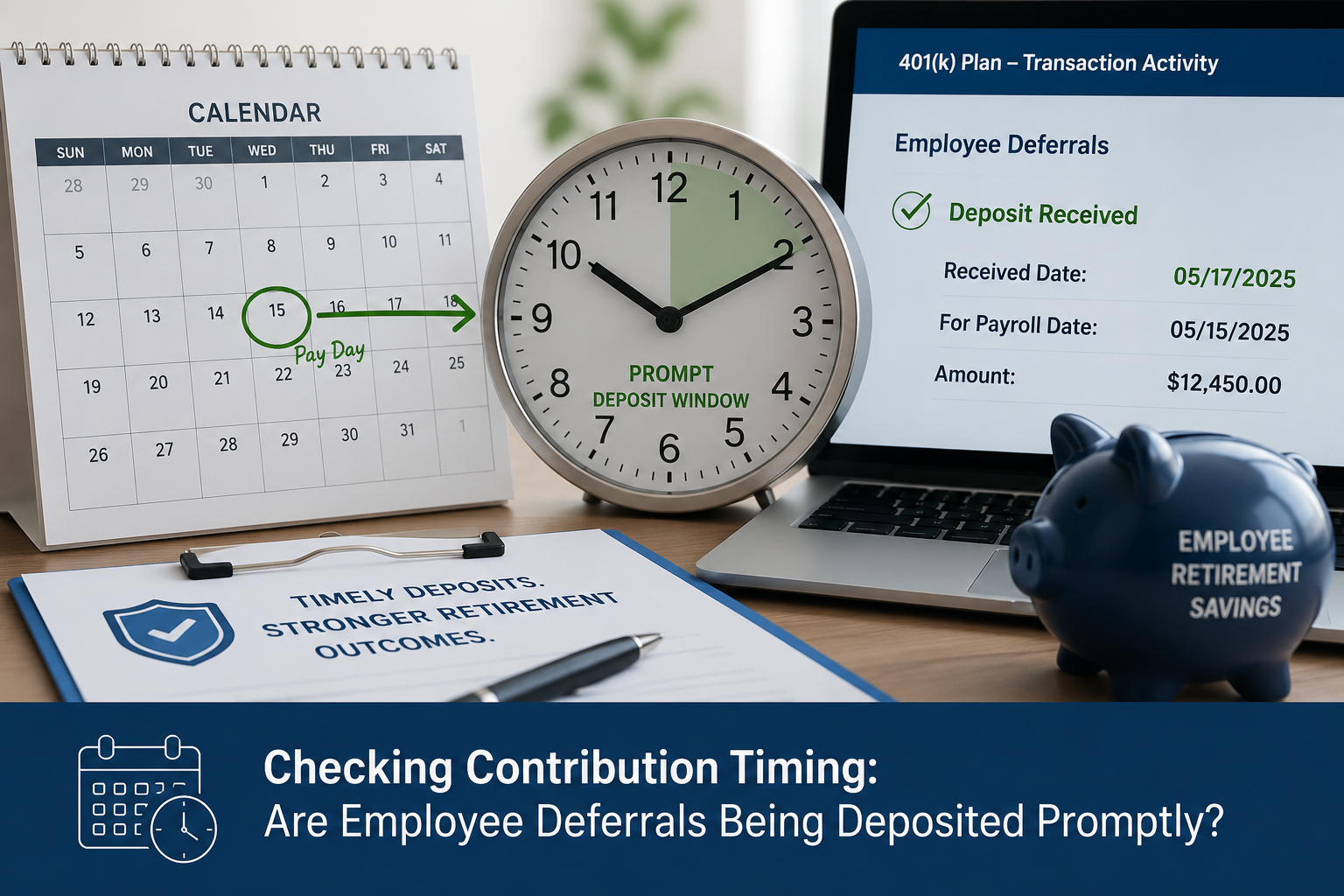
Checking Contribution Timing: Are Employee Deferrals Being Deposited Promptly?

When employees choose to defer part of their pay into your 401(k) plan, they’re trusting that those dollars move from payroll into the plan quickly and consistently. 

Eligibility, Entry Dates, and Compensation Definitions: A Mid Year Check for Business Owners

For business owners sponsoring a 401(k) plan, three core concepts shape how the plan works every day: who is eligible, when employees enter the plan, and what counts as compensation for contributions and testing. 

Is Your 401(k) Plan Document Aligned With How You Operate the Plan?

For a business owner sponsoring a 401(k) plan, the written plan document is the foundation of everything: it describes who can participate, how contributions work, when money can be taken out, and more. To keep the plan tax‑qualified, it must be both written correctly and operated in accordance with its written document. 

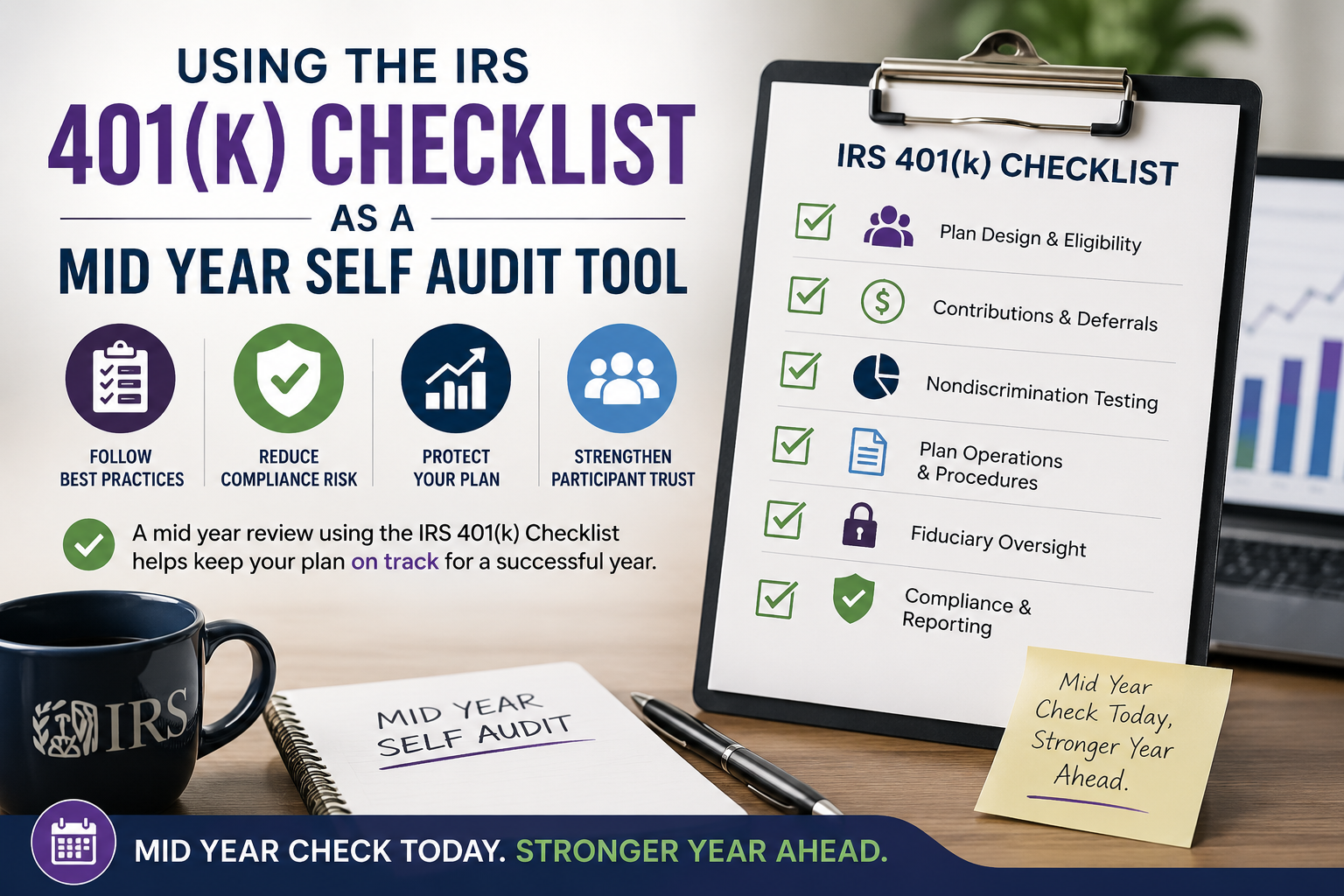
Using the IRS 401(k Checklist as a Mid Year Self Audit Tool

A 401(k) plan is a valuable benefit for your team, but it also comes with ongoing responsibilities for you as a business owner and plan sponsor. Mid year is a practical time to pause and run a structured self-check on the plan, while there’s still time in the calendar year to correct issues and refine processes. 

Managing Taxes on Social Security and 401(k) Income Together

Managing Social Security and 401(k) income can feel overwhelming, but the main challenge is tracking one key number: your combined (or provisional) income. 

Tax Considerations When Drawing From 401(k)s in Retirement.

At Duncan Williams Asset Management, we know traditional 401(k) withdrawals in retirement are generally taxed as ordinary income. When and how you draw from these accounts can significantly affect both your lifetime tax bill and the net income you actually spend.

Lets Talk >