Retirement

How 401(k) Loans Fit Into a Broader Debt Picture

For many households, decisions about debt and retirement go hand in hand. A 401(k) account is often one of the biggest financial assets, while credit cards, auto loans, student loans, medical bills, or a mortgage can create ongoing monthly stress. 

Understanding Duration: How Interest Rate Changes Affect Bond Fund Values

Many 401(k) investors think of bond funds as the “safe” or conservative part of their retirement savings. While they’re generally less volatile than stocks, bond funds don’t always hold steady—they rise and fall in value for several reasons. 

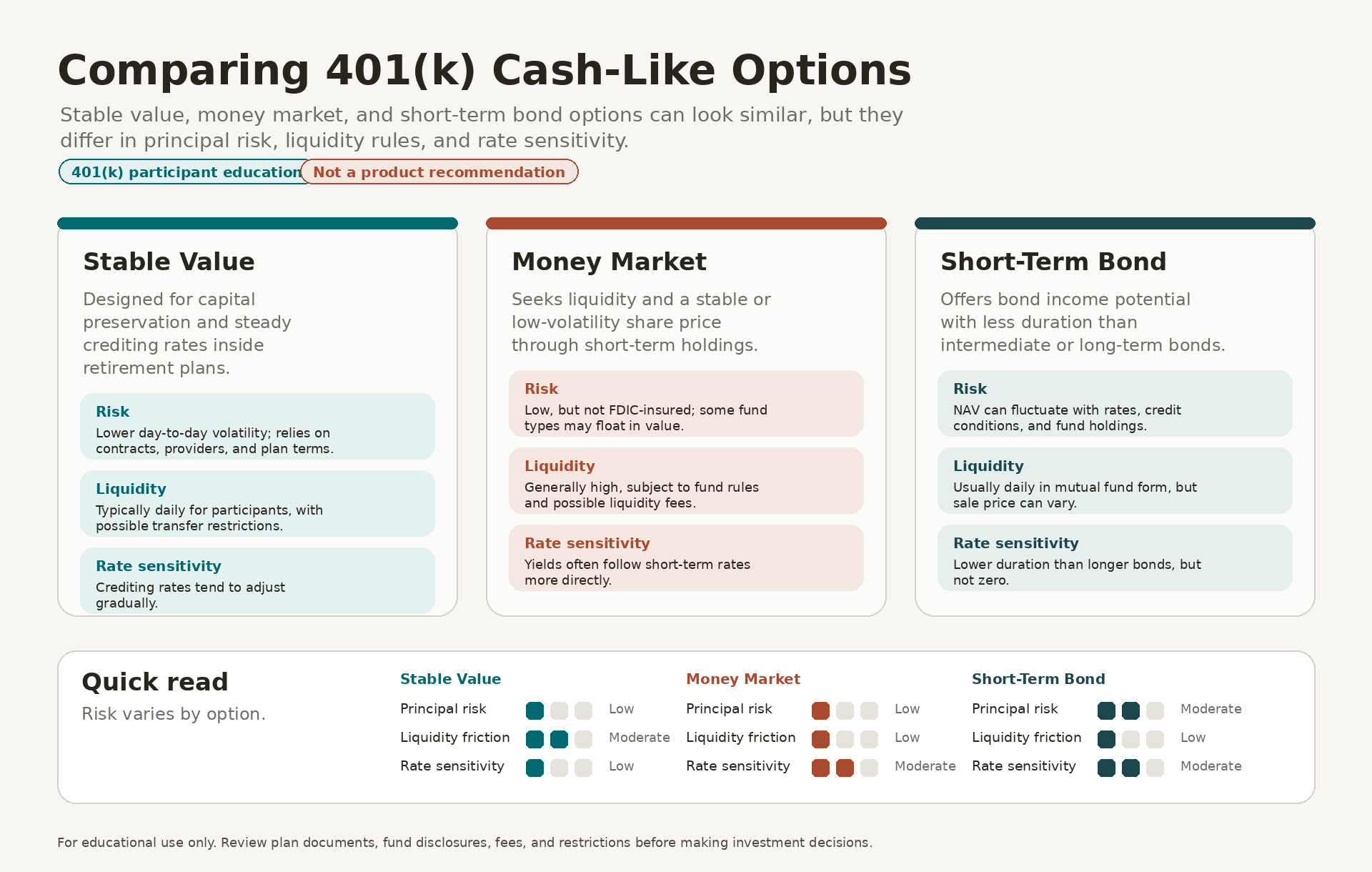
Comparing Stable Value, Money Market, and Short-Term Bond Options

For many people saving for retirement, the "cash-like" part of a 401(k) plan seems straightforward. 

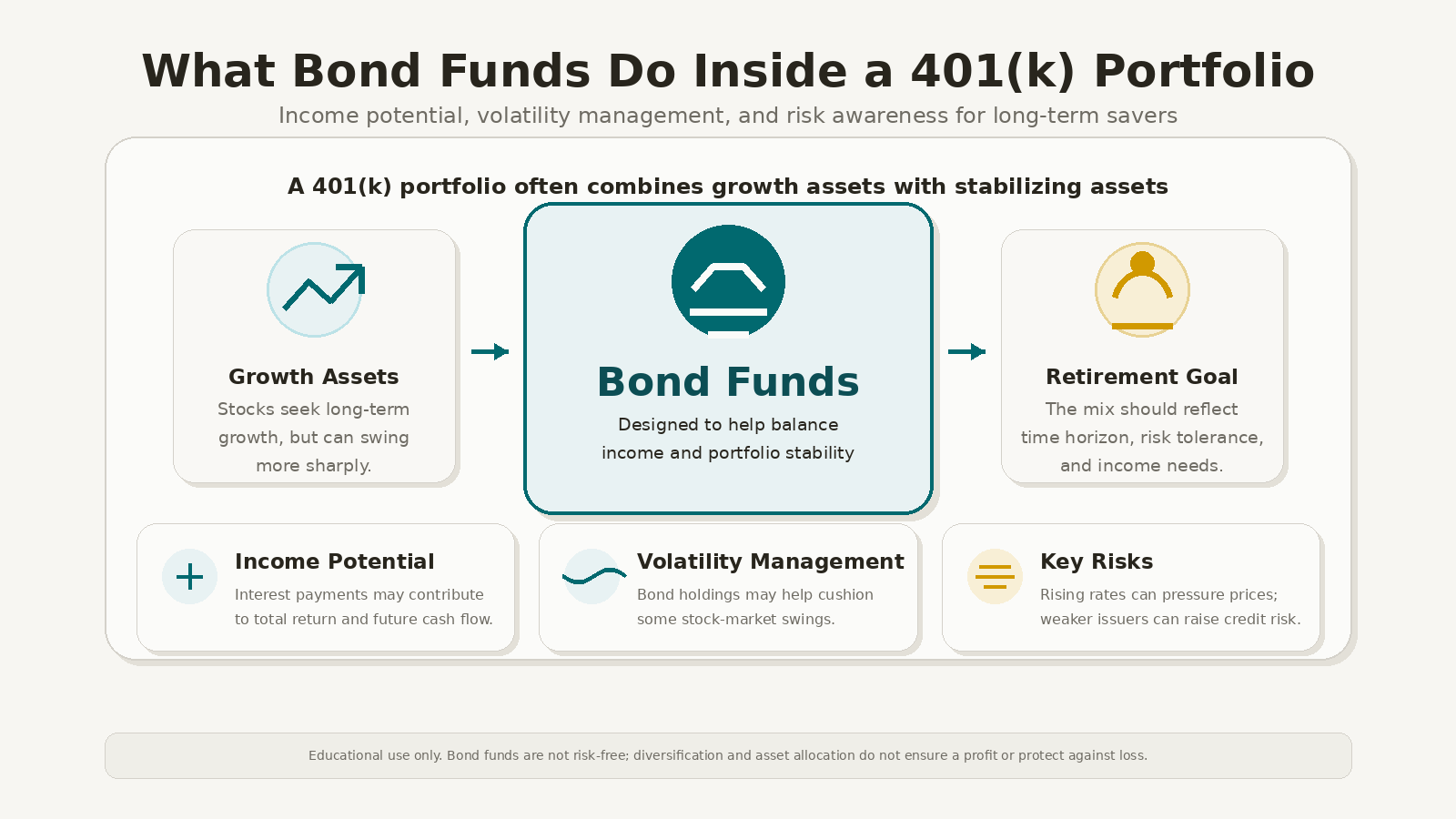
What Bond Funds Do Inside a 401(k) Portfolio

Bond funds are often called the “safer” side of a 401(k), but that label can be misleading. They don’t eliminate risk or guarantee income. Within a retirement portfolio, bond funds typically provide income, diversify beyond stocks, and help smooth market swings. 

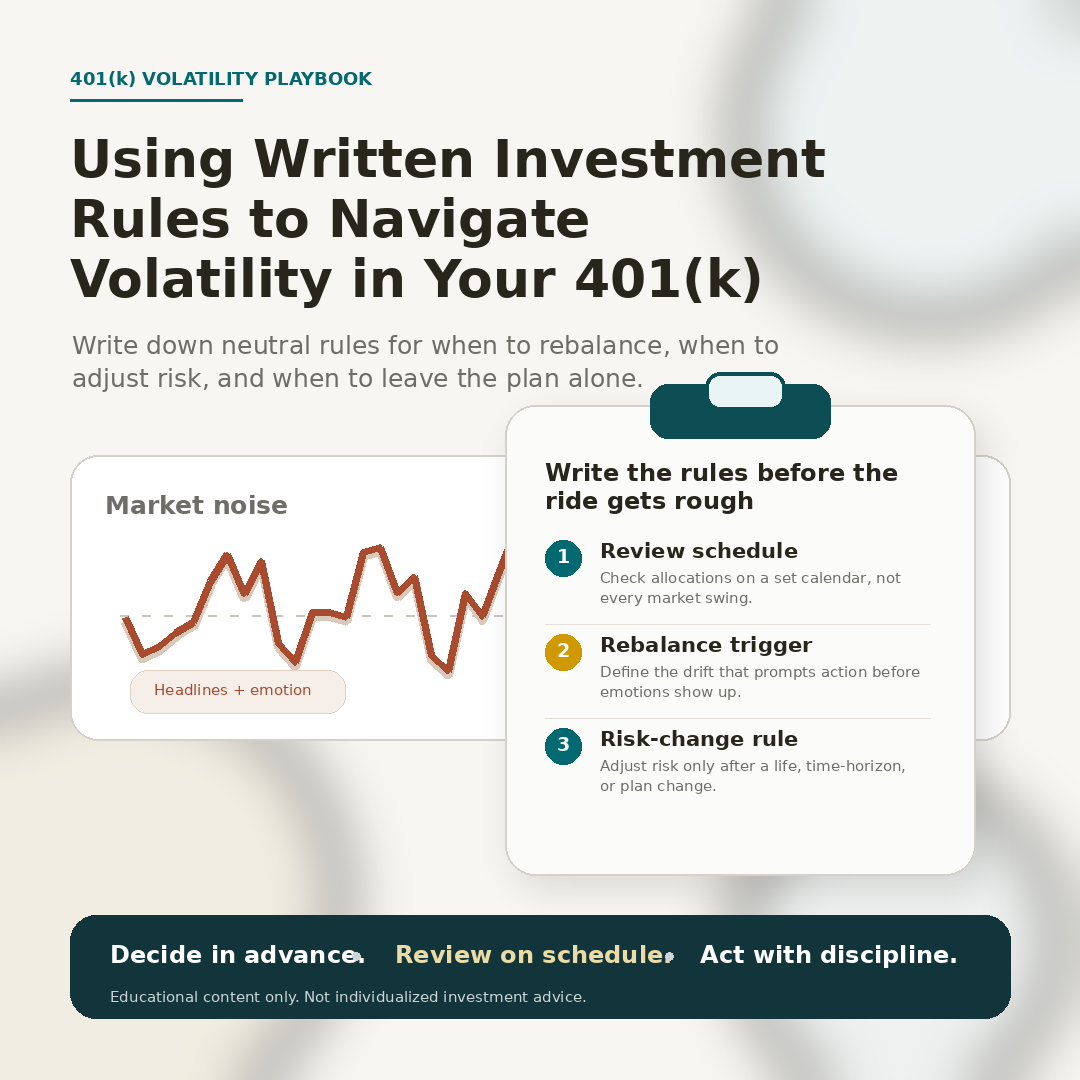
Written Rules Can Help 401(k) Investors Stay Disciplined

Market volatility can make even long-term investors second-guess their 401(k) strategy. One way to reduce emotional decision-making is to write down neutral investment rules in advance, including when to review allocations, when to rebalance, and when a true change in risk may be appropriate.

Why 401(k) Changes Based on Daily Headlines Can Be Risky

Many investors feel the urge to react to the latest market headlines. News about inflation, interest rates, geopolitical conflict, or sharp market drops often creates a temptation to quickly adjust a 401(k) allocation. 

Lets Talk >